
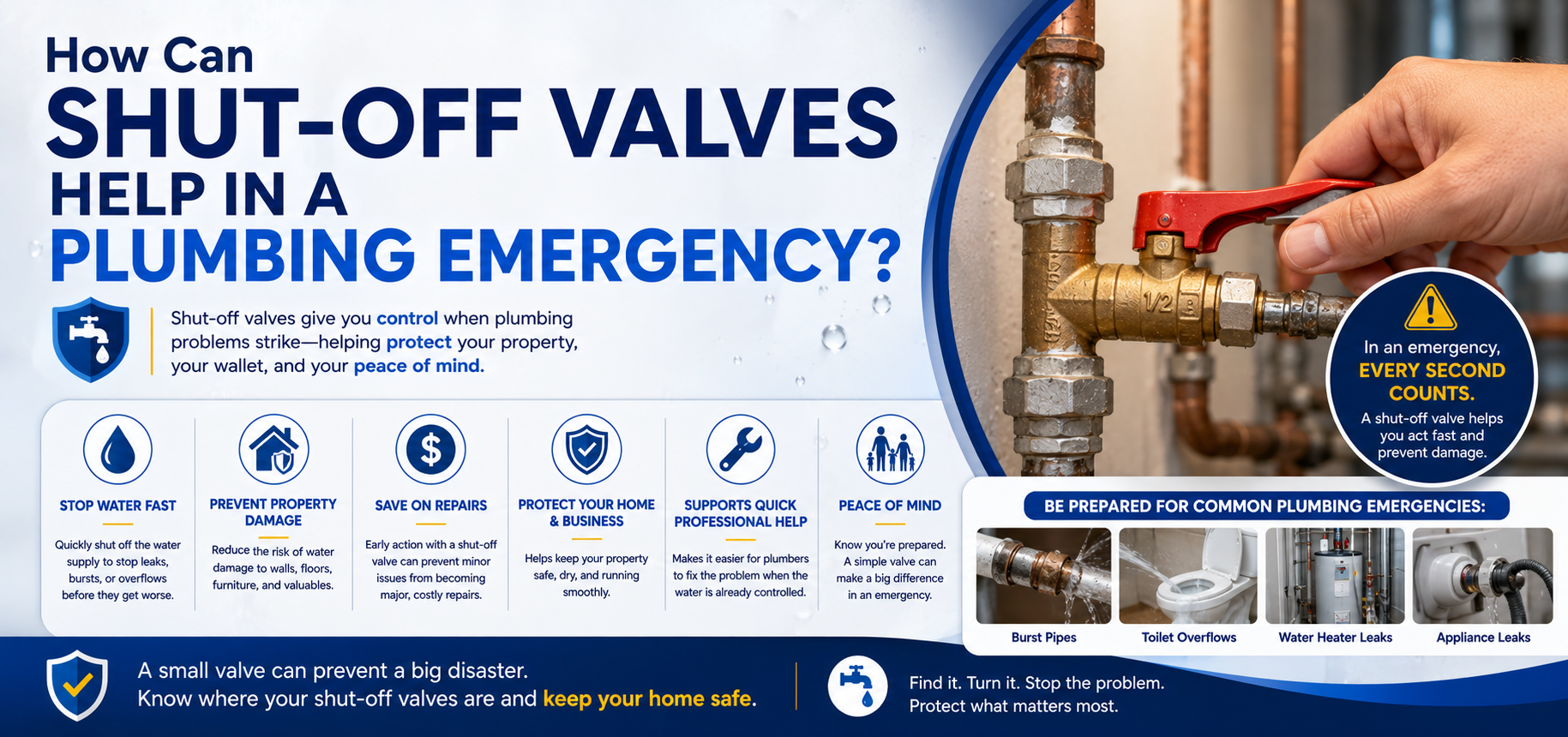
Properly installed, accessible, and functioning shut-off valves can help isolate the water supply during certain plumbing emergencies. Closing the appropriate valve may stop or reduce continued water flow from a burst pipe, leaking fixture, failed appliance connection, or damaged supply line while professional repairs are arranged. However, water isolation does not repair the underlying fault or guarantee that property damage will be avoided. The appropriate response depends on the plumbing system, source of the water, valve arrangement, and surrounding safety conditions.
What Does a Plumbing Shut-Off Valve Do?
A water shut-off valve controls water flowing through a particular part of the plumbing system. Depending on its location, a valve may isolate the entire property, a plumbing branch, an appliance, or an individual fixture.
This isolation can be particularly useful when water is escaping from a pressurized supply line. Consequently, reducing or stopping the incoming water can limit the amount of additional water discharged while the plumbing problem remains unresolved.
However, not all unwanted water comes from a controllable supply line. Drainage backups, sewage problems, groundwater, and other sources may require different responses.
Which Shut-Off Valve Controls the Water?
Properties can have several types of isolation valves. Therefore, knowing what each accessible valve controls can make emergency response more practical.
Main Water Shut-Off Valve
The main water valve generally controls the incoming water supply to the property or a substantial portion of it, depending on the plumbing configuration.
It can be useful when a major leak cannot be isolated with a smaller local valve. However, shutting the main supply can also interrupt water to unaffected fixtures and areas.
Fixture-Specific Valves
Individual fixtures may have dedicated valves that allow more targeted water isolation. Common examples include:
Toilet supply valves
Sink and faucet supply valves
Fixture supply-line valves
Other local isolation valves where installed
For example, if a toilet supply connection develops a leak and its local valve operates properly, that fixture may potentially be isolated without interrupting the entire property's water supply.
Appliance and Branch-Line Valves
Some plumbing systems include isolation valves for appliances or individual plumbing branches. Washing machines, dishwashers, or other water-connected equipment may have dedicated supply controls depending on the installation.
Moreover, branch-line valves can allow sections of a plumbing system to be isolated. Not every property has the same arrangement, so the appropriate isolation point depends on the system design.
How Can Proper Installation Help During an Emergency?
A valve is most useful when it is correctly selected for its intended application, properly installed, accessible, identifiable, and capable of operating when needed.
Property owners considering shut-off valve installation in Toronto should focus on appropriate valve locations and professional assessment of the existing water supply system rather than simply increasing the number of valves.
Faster Water Isolation
A major plumbing leak can continue releasing water as long as the affected pressurized line remains supplied. An accessible valve may allow the relevant water line to be isolated more quickly.
Consequently, less additional water may escape after isolation than if the supply remained open. Nevertheless, water already released can continue spreading, and isolation cannot reverse existing damage.
More Targeted Control
Fixture or branch isolation can reduce the amount of plumbing that needs to be shut down. For example, a leaking sink connection might be isolated locally while other fixtures remain operational if the plumbing arrangement permits it.
In contrast, a property without suitable local isolation may require shutting off a broader section or the main water supply.
Better Access for Plumbing Repairs
Plumbing repairs frequently require water isolation before work can proceed. Appropriately located valves can therefore help plumbers isolate the relevant section of the system.
Moreover, targeted isolation may reduce disruption during certain repairs because unaffected plumbing can potentially remain available.
Which Plumbing Emergencies May Benefit From Water Isolation?
Shut-off valves can be relevant when an incident involves water continuing to enter through a controllable supply line. The correct valve and response depend on where the problem originates.
Situations may include:
Burst or damaged water supply pipes
Significant plumbing leaks
Leaking faucets or fixtures
Malfunctioning or overflowing toilets where incoming supply contributes
Failed fixture supply lines
Leaking washing machine connections
Dishwasher supply-line failures
Damaged appliance water connections
Certain water heater-related leaks
Unexpected discharge from a pressurized water line
However, shutting off a valve only addresses the incoming supply where that valve controls it. It does not repair a cracked pipe, damaged fitting, failed appliance hose, faulty toilet, leaking water heater, or other defective component.
Why Does Valve Accessibility Matter?
A properly installed valve provides limited emergency value if occupants cannot reach or identify it when water needs to be isolated.
Valves should remain reasonably accessible for their intended use rather than becoming concealed behind permanent finishes, stored belongings, or other obstructions where access is required. Appropriate placement depends on the property and plumbing design.
Meanwhile, household members or responsible building occupants can benefit from knowing where relevant accessible shut-off points are located before an emergency occurs.
However, a seized, damaged, heavily corroded, or unusually difficult valve should not be forced. Excessive force could damage the valve or connected plumbing.
What Signs Suggest a Shut-Off Valve Needs Attention?
Existing valves can deteriorate or develop operational problems. A plumbing inspection may be appropriate when a valve shows signs such as:
Visible leakage or recurring seepage
Corrosion or material deterioration
Physical damage
Difficulty operating normally
Inability to fully stop water flow
Poor or obstructed accessibility
An unsuitable component identified during professional assessment
One symptom does not necessarily mean immediate valve replacement is required. For example, visible moisture could originate from a nearby connection rather than the valve itself.
Therefore, professional assessment can help determine whether servicing, repair, accessibility improvements, or valve replacement is appropriate.
When Does a Plumbing Emergency Require Additional Safety Measures?
Water isolation is only one part of responding to a plumbing incident. Some situations create hazards beyond the plumbing failure itself.
For example, water near electrical equipment or energized components can create an electrical hazard. Sewage or potentially contaminated water requires appropriate precautions, while severe flooding may create additional property or structural concerns.
Consequently, occupants should avoid entering or handling unsafe areas and seek appropriate professional assistance when electrical hazards, contaminated water, significant flooding, structural concerns, or other dangerous conditions are present.
Why Does Proper Shut-Off Valve Installation Matter?
Correctly installed and accessible shut-off valves provide practical control over water supply during certain plumbing emergencies. They can help isolate a leaking fixture, appliance, branch line, or broader plumbing system and may reduce continued water discharge while repairs are arranged. However, shutting off water does not fix the underlying plumbing failure or guarantee protection from damage. Valve location, accessibility, condition, plumbing design, and the source of the problem all determine which isolation approach is appropriate.